

Water Mitigation in Glendale, CA
Glendale's slab and raised crawl-space foundations face particular risk during heavy winter rainfall and flash flooding events that drain through nearby wash channels and foothill corridors. Water mitigation requires swift action to prevent foundation saturation, structural damage, and costly secondary problems that extend far beyond the initial water entry. Lorne Water Damage Restoration connects Glendale property owners with local restoration providers who respond quickly to active water damage, helping protect your home and minimize recovery time.
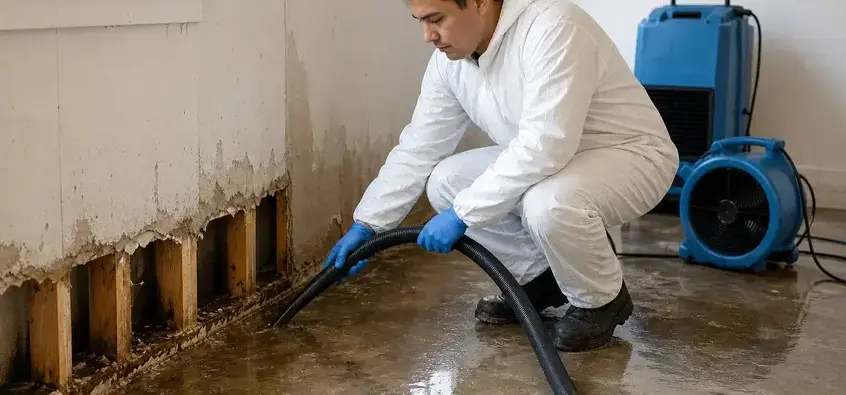
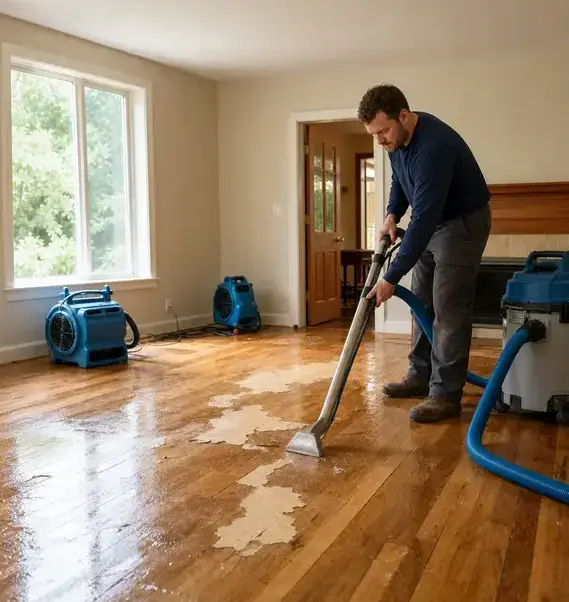
Water Mitigation Services for Glendale Property Owners
Glendale's residential and commercial properties face a significant water damage threat from heavy seasonal winter rainfall and flash flooding, particularly in areas closer to natural drainage channels and foothill runoff paths. When water enters a structure—whether through compromised foundations, roof leaks, or ground-level flooding during heavy precipitation—the window to prevent long-term damage closes quickly. Water that sits inside walls, under flooring, or within structural cavities can lead to material degradation, mold development, and costly repairs if not addressed promptly. Property owners throughout Glendale understand that water mitigation is not optional; it is an essential response to active water intrusion and the conditions that follow a significant weather event or plumbing failure.
Lorne Water Damage Restoration connects Glendale property owners with independent local restoration providers who specialize in water mitigation—the critical first steps of water removal, structural drying, and moisture control. These providers arrive quickly to assess the extent of water exposure, remove standing water and saturated materials, and deploy equipment to dry affected areas thoroughly. The goal is to stop the progression of water damage and restore conditions to a safe, dry state. Working with a local provider means faster response times and ongoing support as your property recovers. When water damage strikes Glendale, reaching out for professional water mitigation help is the most effective way to protect your investment and peace of mind.
Why Glendale Property Owners Choose Lorne Water Mitigation
Fast Water Mitigation Response
Water mitigation requires immediate action to prevent structural damage and mold growth. Lorne connects you with local providers who prioritize rapid dispatch and same-day arrival, minimizing water exposure and protecting your property.
Thorough Water Mitigation Treatment
Effective water mitigation goes beyond surface cleanup. The independent providers in Lorne's network use professional-grade extraction, dehumidification, and monitoring to ensure complete moisture removal from walls, flooring, and hidden spaces throughout your home.
Clear Water Mitigation Communication
Confusion during a water damage emergency adds stress. Lorne's local providers explain each step of the water mitigation process, document damage for insurance purposes, and keep you informed so you know exactly what's happening in your home.
Glendale Winter Flooding Preparedness
Heavy seasonal rain and drainage concerns near the Verdugo Wash create significant water risk for Glendale homes, especially those in low-lying areas and hillside properties. Swift water mitigation is critical—Lorne connects you with providers who understand local flooding patterns and respond fast when winter weather threatens.
How Our Water Mitigation Process Works
From your initial call to the final inspection, we provide a structured, professional, and efficient process to ensure your property is fully restored after Water Mitigation.
Contact a Local Water Mitigation Provider
Call Lorne Water Damage Restoration to connect with an independent water mitigation specialist in Glendale. We'll match you with a local provider ready to assess your property and begin protecting it from further water intrusion.
Assess Water Damage & Mitigation Needs
The provider inspects your property to identify water entry points, saturation levels, and affected materials. Given Glendale's winter rain and drainage patterns, they'll evaluate how water infiltrated your slab or crawl-space foundation and develop a mitigation strategy.
Execute Water Mitigation & Monitor Drying
The independent provider removes standing water, applies targeted drying equipment, and manages moisture to prevent secondary damage. They'll work with your insurance adjuster and keep you informed throughout the mitigation process until conditions stabilize.
Dealing with Water Mitigation in Glendale? Get fast, professional help.
Call Now — (818) 582-9978Water Mitigation Services for Glendale Residents
Glendale's geography and seasonal weather patterns create specific water-damage challenges that shape how mitigation work unfolds across the community. Many homes rest on slab or raised crawl-space foundations—the standard approach for Southern California construction—while hillside properties in areas like Verdugo Woodlands and Chevy Chase Canyon may use pier-and-beam or stem-wall designs. Each foundation type responds differently to water intrusion, and effective mitigation must account for how moisture moves through or beneath these structures once it enters.
The primary water risk in Glendale stems from heavy seasonal winter rainfall and flash-flooding potential, particularly in neighborhoods situated near the Verdugo Wash and foothill drainage channels. When intense rain occurs, water mitigation becomes time-sensitive: standing water and moisture saturation can compromise structural integrity and create conditions for secondary damage within hours. Local restoration providers connected through this service understand these regional patterns and can respond quickly to assess moisture penetration, remove standing water, and deploy drying strategies tailored to Glendale's foundation styles and drainage patterns, helping protect properties before damage becomes costly.
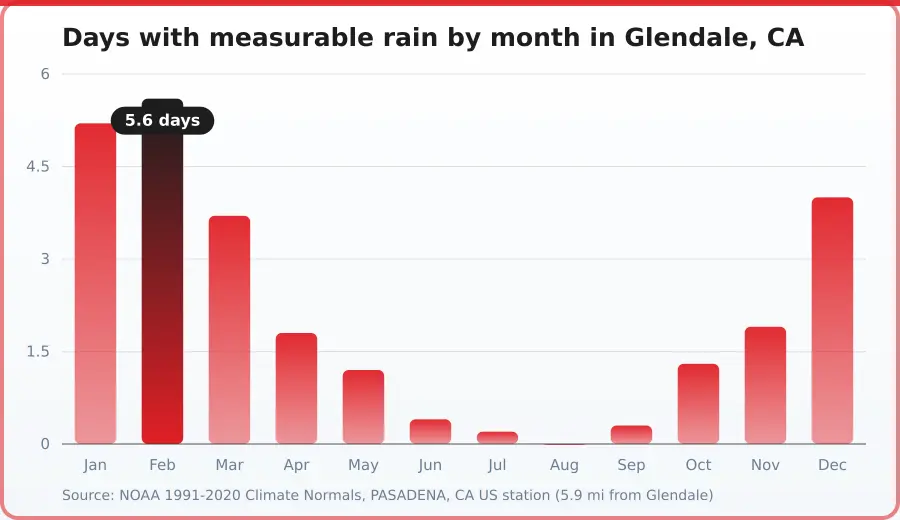
| Period | Days with measurable rain by month (days) |
|---|---|
| Jan | 5.2 |
| Feb | 5.6 |
| Mar | 3.7 |
| Apr | 1.8 |
| May | 1.2 |
| Jun | 0.4 |
| Jul | 0.2 |
| Aug | 0 |
| Sep | 0.3 |
| Oct | 1.3 |
| Nov | 1.9 |
| Dec | 4 |
Source: NOAA 1991-2020 Climate Normals, PASADENA, CA US station (5.9 mi from Glendale). Retrieved October 4, 2026.
Water Mitigation Across Glendale's Seasons
Spring: Post-Rain Recovery
Spring rains taper off, but saturated soil and lingering moisture in crawl spaces and slab-foundation areas create ideal conditions for delayed water damage. Lorne Water Damage Restoration connects Glendale property owners with local providers who assess hidden moisture, extract standing water, and deploy drying equipment before mold takes hold.
Summer: Heat and Drying
Elevated temperatures accelerate evaporation but can also drive moisture deeper into structural materials if initial water mitigation wasn't thorough. Local providers accessed through Lorne identify moisture pockets missed during spring and summer, using targeted drying to prevent long-term damage and wood decay that heat alone won't resolve.
Fall: Preparation Season
As the season transitions toward wetter months, gutters, downspouts, and drainage paths around foundations become critical focal points for water mitigation planning. Lorne connects Glendale residents with local professionals who evaluate grading, clear debris, and test water-diversion systems—preventing the water intrusion and flooding risks that intensify when heavy rain returns.
Winter: Flood Risk and Response
Winter brings heavy seasonal rainfall and flash flooding, particularly in areas near Verdugo Wash and foothill drainage channels where runoff concentrates. Homes built on slab and raised crawl-space foundations face elevated risk during this period. Lorne Water Damage Restoration quickly connects property owners to local water mitigation specialists who respond to active flooding, remove standing water, dry affected structures, and prevent secondary damage throughout the wet season.
Homeowner Safety Toolkit
Verify Your Glendale, CA Water Damage Restoration Company
Before you hire anyone, use these independent national resources to confirm credentials, standards, and track record.
BBB
Look up any restoration company's complaint history, customer reviews, and accreditation status — a free, independent check before you hire.
Check StandingNADCA
Sets the industry standard for inspecting and cleaning HVAC systems after water damage, so contaminated ductwork doesn't spread moisture through the rest of the house.
Duct & Air StandardsRIA
A national trade association whose member companies agree to a written code of ethics covering honest estimates, safety, and fair billing.
Code of EthicsWater Mitigation FAQs — Glendale, CA
Water mitigation focuses on stopping active water intrusion and removing standing water to prevent further damage. The process typically includes shutting off water sources, extracting standing water, removing saturated materials, and beginning controlled drying. Local providers connected through Lorne assess your specific situation and outline the steps needed to stabilize your property and reduce long-term harm.
Water damage demands urgent action. Lorne connects Glendale property owners with local independent providers who understand the time-sensitive nature of mitigation work. Response times vary by provider and current demand, but the goal is rapid local dispatch to begin water extraction and drying before secondary damage spreads throughout your home.
Water mitigation pricing depends on the volume of water present, affected area size, material types involved, and how quickly you act. Faster response generally reduces overall costs by limiting water absorption and secondary damage. Independent providers will assess your property and discuss pricing factors with you directly before starting work.
Before mitigation crews arrive, move valuable items away from wet areas if it is safe to do so, document damage with photos for insurance, and turn off electrical power to affected rooms if water is near outlets or appliances. Stay out of standing water, especially if it may contain contaminants. Provide the provider clear access to all damaged areas so they can work efficiently.
Mitigation itself addresses immediate water intrusion, but preventing recurrence requires identifying root causes—whether drainage issues, foundation vulnerabilities, or maintenance gaps. After mitigation is complete, local providers can advise on longer-term protective steps and recommend follow-up inspections to catch potential problems early.
Heavy winter rainfall and flash flooding are significant risks in this region, particularly for properties near drainage channels and foothill areas. During wet months, water intrusion can escalate rapidly, making immediate mitigation critical. Acting quickly during peak rain season prevents water from penetrating deep into foundations and structural materials that are typical to Southern California homes.
Dealing with Water Mitigation in Glendale, CA? Call (818) 582-9978 for 24/7 help.
Call Now — (818) 582-9978Areas We Serve Near Glendale, California
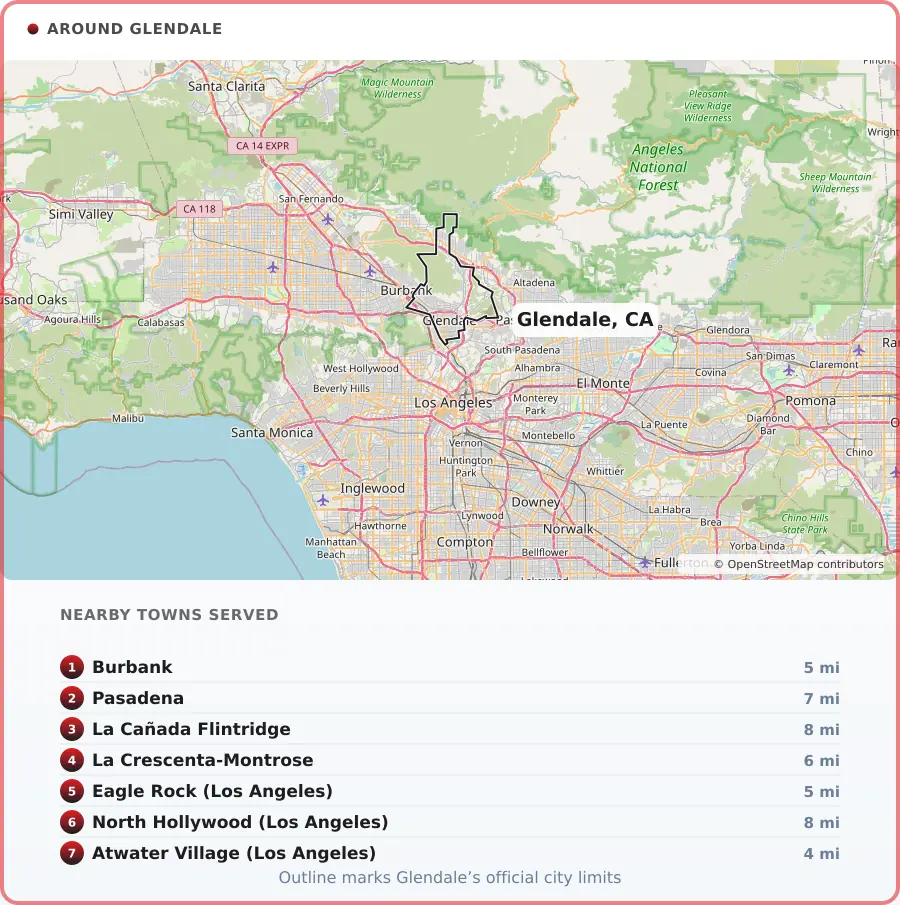
Glendale, CA is the centre of the service area, which extends to 7 surrounding towns. The map shows how far that reaches.
Glendale, CA Information
Tucked between the San Gabriel Mountains and the edge of Los Angeles, Glendale, CA has grown into one of the region's steadiest economic engines. Entertainment runs deep here, with Disney's creative campus and DreamWorks Animation anchoring a media presence that echoes nearby Burbank's studio corridor. That creative energy sits alongside solid healthcare and education institutions, corporate headquarters in retail and food service, and a mix of office, retail, and residential life that keeps roughly 196,500 residents connected to both local jobs and the pull of downtown LA.
Glendale's character shows in its neighborhoods — the quiet, tree-lined streets of Verdugo Woodlands feel a world away from the everyday bustle around Glendale City Center, yet both share the same practical, community-minded spirit that runs through this corner of Southern California.
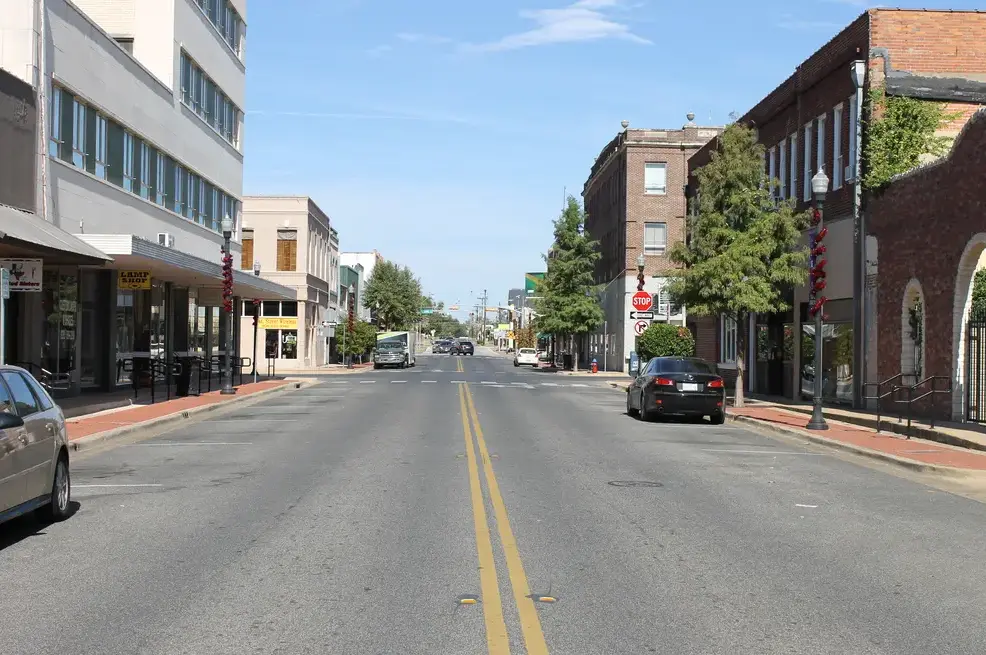
Photo: Billy Hathorn, CC BY-SA 3.0