

Water Damage Restoration Cost in Glendale, CA
Glendale's hillside and valley neighborhoods face significant water damage risk during heavy winter rainfall and flash flooding, particularly in areas where drainage channels concentrate runoff. Water damage restoration cost depends entirely on what an independent local provider discovers during their inspection—the extent of saturation, affected materials, and necessary remediation work—which is why rapid response typically limits the scope and complexity of restoration.
Understanding Water Damage Restoration Cost in Glendale
Glendale property owners face real exposure to water damage during heavy seasonal winter rainfall, particularly in areas where drainage from the Verdugo Wash and local foothill channels can overwhelm foundations and crawl spaces. When water enters a home—whether through flooded entry points, roof leaks, or foundation seepage—the scope and cost of restoration work depends entirely on what was damaged and how quickly the situation is addressed. Neighborhoods from Verdugo Woodlands to Sparr Heights experience similar seasonal water risks, and understanding what drives restoration cost helps property owners make informed decisions before calling for help.
Lorne Water Damage Restoration connects Glendale property owners with independent local restoration providers who assess damage on-site and explain exactly what the restoration process will involve and what it will cost. Rather than guessing at price tags, you hear directly from the provider handling your specific situation—one who understands Glendale's water patterns and foundation types. Acting quickly when water damage occurs almost always keeps the restoration scope manageable, which affects the overall work required. Connecting with a local provider fast means damage is documented, water extraction begins promptly, and drying and recovery costs are kept as low as the actual damage allows.
Why Water Damage Restoration Cost Varies in Glendale
Water Type Determines Scope
Clean water from a burst pipe costs less to restore than gray water from appliances or black water from sewage. The dirtier the water source, the more extensive the cleaning, disinfection, and safety protocols required, which directly increases restoration scope and cost.
Area and Materials Affected
Restoration cost depends on how much square footage was wet and which materials absorbed water. Drywall, flooring, cabinets, and insulation each require different removal, drying, and replacement work. Larger areas and more absorbent materials mean longer timelines and more labor.
Drying Time and Equipment Needs
How long drying takes depends on humidity, temperature, and how deep water penetrated. Faster drying requires industrial dehumidifiers, air movers, and moisture monitoring—equipment that must run continuously. Extended drying periods and specialized equipment both add to the total cost of restoration work.
Winter Rainfall and Foundation Exposure
Glendale's heavy seasonal winter rain and drainage patterns, especially near foothill areas and the Verdugo Wash, can saturate soil around foundations and crawl spaces. Water intrusion into these spaces requires more intensive drying and monitoring, which increases the scope and duration of restoration compared to surface-only water damage.
How Your Water Damage Restoration Cost Is Estimated in Glendale, CA
From your first call to the final invoice, the goal is simple: understand what is driving Water Damage Restoration Cost for your property before any work begins.
Request an On-Site Estimate
Call Lorne Water Damage Restoration to describe what happened and where water entered your Glendale home. The independent local provider you're connected to will schedule a prompt inspection to assess the full scope of water damage restoration work needed and what drives its cost.
Inspection Determines Restoration Cost Scope
The provider inspects which materials absorbed water—drywall, flooring, cabinetry, insulation—and identifies the water category (clean, gray, or sewage), wet area size, drying time required, and equipment needed. Seasonal rainfall and drainage-channel flooding in Glendale can saturate foundations and crawl spaces; the deeper and longer water sits, the more extensive the restoration scope and cost. They'll note whether structural removal and rebuilding are necessary and whether mold has begun, all factors that shape the final estimate.
Review the Estimate Before Work Begins
The provider presents a detailed estimate breaking down the water damage restoration cost by category—extraction, drying time, materials removed, labor, equipment rental—so you understand what drives the price before approving any work. Acting fast limits how much drying, material replacement, and structural repair becomes necessary, which directly affects restoration cost.
Wondering about Water Damage Restoration Cost in Glendale? Get an on-site estimate from a local provider.
Call Now — (818) 582-9978Water Damage Restoration Cost Factors in Glendale
Glendale's geography and seasonal weather patterns shape what water damage restoration will cost. Most homes here are built on slab or raised crawl-space foundations, with some hillside properties using pier-and-beam construction—all common to Southern California. The primary water-damage risk across the area comes from heavy seasonal winter rainfall and flash flooding, particularly in neighborhoods closer to the Verdugo Wash and foothill drainage channels. When water enters a home after heavy rain or flooding, the scope of restoration work—and therefore its cost—depends on how quickly the damage is addressed and which materials absorbed the water.
The category of water involved is a major cost driver. Clean water from a roof leak or burst pipe requires less specialized work than gray water from appliances or black water from sewage or contaminated flooding. The square footage affected and which materials got wet also determine restoration scope: damp drywall, flooring, cabinetry, and insulation in neighborhoods like Rancho San Rafael, Verdugo Woodlands, or Sparr Heights may need removal and replacement. Drying time depends on air circulation, humidity, and how deeply water penetrated—larger affected areas and dense materials like carpet or wood take longer to dry and require more equipment. Acting quickly after water damage occurs typically keeps the restoration scope smaller, which affects the total work and cost. A qualified local provider will inspect the damage in person to assess category of water, affected materials, drying requirements, and any mold growth before determining the actual restoration cost.
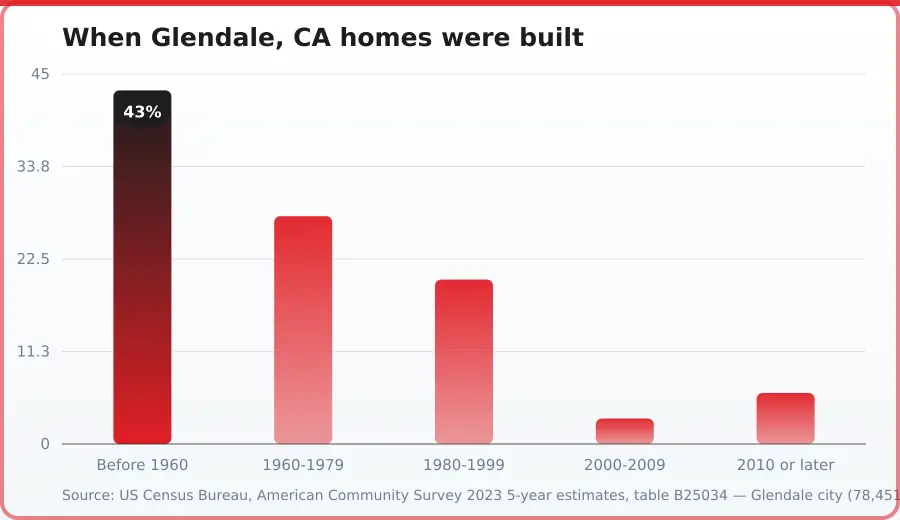
| Period | When homes were built (%) |
|---|---|
| Before 1960 | 43 |
| 1960-1979 | 27.7 |
| 1980-1999 | 20 |
| 2000-2009 | 3.1 |
| 2010 or later | 6.2 |
Source: US Census Bureau, American Community Survey 2023 5-year estimates, table B25034 — Glendale city (78,451 housing units). Retrieved October 4, 2026.
Seasonal Water Damage Restoration Cost Drivers in Glendale
Winter: Heavy Rain and Flooding
Winter brings the year's heaviest rainfall to Glendale, and properties near the Verdugo Wash and foothill drainage channels face elevated flood risk that drives restoration scope and cost upward. Floodwater is typically gray or black category water, requiring full containment, extraction, decontamination, and extended drying—far more involved than clean-water damage. Acting fast minimizes saturation depth in materials like drywall and flooring, keeping labor and replacement costs down.
Spring: Temperature Swings and Seepage
Spring's warming cycle and variable rainfall create conditions where seepage into slab and crawl-space foundations becomes visible and active. Slow, persistent moisture raises restoration cost when it damages subflooring, insulation, and structural wood; early detection and prompt drying prevent mold colonization, which expands the restoration scope significantly. The longer water sits before extraction begins, the more materials must be removed and replaced.
Summer: Air-Conditioning and Humidity Control
Summer heat accelerates moisture evaporation outdoors but raises indoor humidity when air-conditioning systems fail or leak. Cooling system failures release clean water that seems minor but, if left standing in carpeting or cabinetry, promotes rapid mold growth within days—transforming a simple extraction job into a full remediation requiring structural removal. Quick water removal during summer's peak heat allows natural and mechanical drying to work faster, reducing total restoration cost.
Fall: Seasonal Neglect and Debris
Fall's scattered storms often catch property owners off guard after months of dry weather, delaying damage discovery and allowing water to soak into walls and beneath flooring. Neglected water damage compounds restoration cost because materials have begun to fail structurally, and mold may already be establishing. Gutter and drainage maintenance before fall rains arrive prevents many of the costly extractions and material replacements that restoration providers would otherwise need to perform.
Homeowner Safety Toolkit
Verify Your Glendale, CA Water Damage Restoration Company
Before you hire anyone, use these independent national resources to confirm credentials, standards, and track record.
BBB
Look up any restoration company's complaint history, customer reviews, and accreditation status — a free, independent check before you hire.
Check StandingNADCA
Sets the industry standard for inspecting and cleaning HVAC systems after water damage, so contaminated ductwork doesn't spread moisture through the rest of the house.
Duct & Air StandardsRIA
A national trade association whose member companies agree to a written code of ethics covering honest estimates, safety, and fair billing.
Code of EthicsWater Damage Restoration Cost FAQs — Glendale, CA
The primary cost drivers are the category of water involved, the size and materials of affected areas, how long drying takes, and whether structural repairs become necessary. Contamination level, extent of saturation, and the specific surfaces damaged—drywall, flooring, insulation, finishes—all shape the scope and expense. A local provider's on-site inspection determines these factors and sets your restoration cost.
Yes. Quick action limits how far water spreads into walls, foundations, and materials, reducing the area requiring restoration. Faster intervention also prevents secondary damage like mold growth and structural deterioration, which compound restoration costs significantly. Delaying a call typically expands the damage zone and pushes restoration expenses higher.
An independent local restoration provider visits your property to inspect water damage firsthand. They assess the affected materials, measure affected square footage, evaluate drying complexity, and identify any rebuild work needed. Based on this inspection, the provider creates an estimate that reflects your specific damage and restoration requirements.
Insurance policies vary widely in what water damage they cover—some address sudden leaks while others exclude gradual seepage or flooding. Coverage depends on your specific policy terms and the damage cause. Contact your insurer about your claim; the restoration provider can often work directly with your insurance company during the process.
Lorne Water Damage Restoration connects you with independent local providers in your area who respond rapidly to damage calls. Once you reach out, a provider can typically schedule an on-site inspection and provide a detailed cost estimate within hours, allowing you to begin restoration without delay.
Heavy winter rainfall and localized flash-flooding conditions common to the region can increase restoration demand and scope, particularly for properties near drainage channels and low-lying areas. Homes affected by seasonal water intrusion may face higher restoration costs due to expanded damage and longer drying times. An inspection reveals the full extent of water penetration specific to your location.
Questions about Water Damage Restoration Cost in Glendale, CA? Call (818) 582-9978 to arrange a local on-site estimate.
Call Now — (818) 582-9978Areas We Serve Near Glendale, California
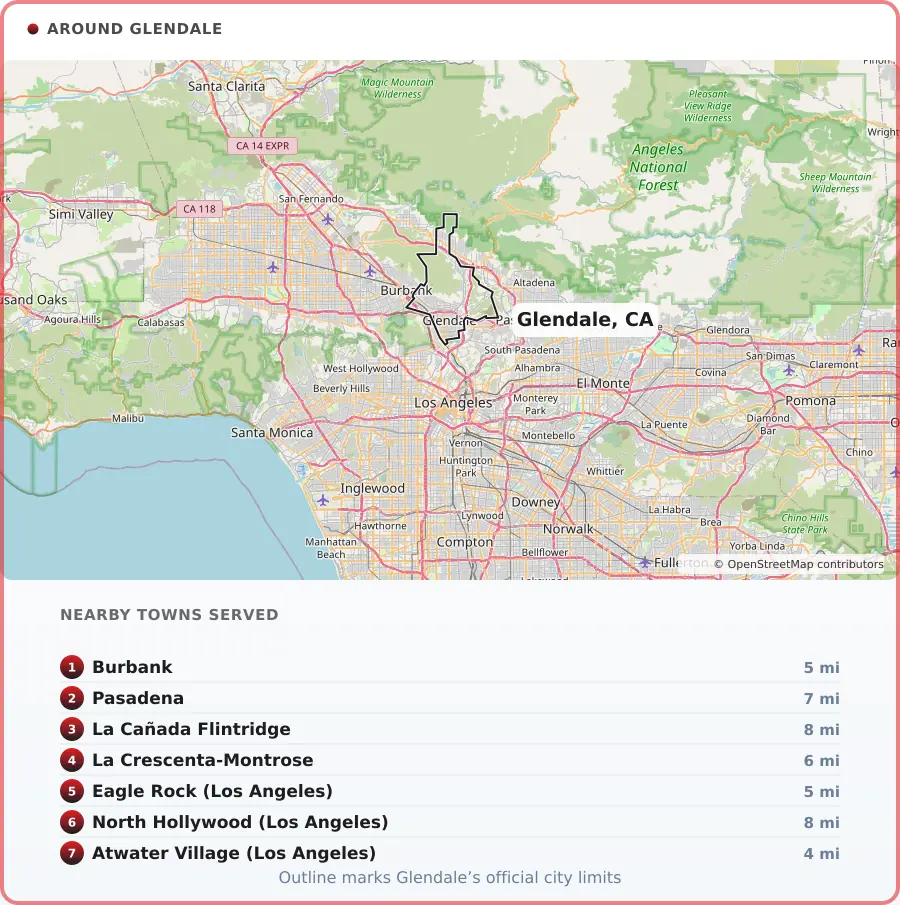
Glendale, CA is the centre of the service area, which extends to 7 surrounding towns. The map shows how far that reaches.
Glendale, CA Information
Tucked between the San Gabriel Mountains and the edge of Los Angeles, Glendale, CA has grown into one of the region's steadiest economic engines. Entertainment runs deep here, with Disney's creative campus and DreamWorks Animation anchoring a media presence that echoes nearby Burbank's studio corridor. That creative energy sits alongside solid healthcare and education institutions, corporate headquarters in retail and food service, and a mix of office, retail, and residential life that keeps roughly 196,500 residents connected to both local jobs and the pull of downtown LA.
Glendale's character shows in its neighborhoods — the quiet, tree-lined streets of Verdugo Woodlands feel a world away from the everyday bustle around Glendale City Center, yet both share the same practical, community-minded spirit that runs through this corner of Southern California.
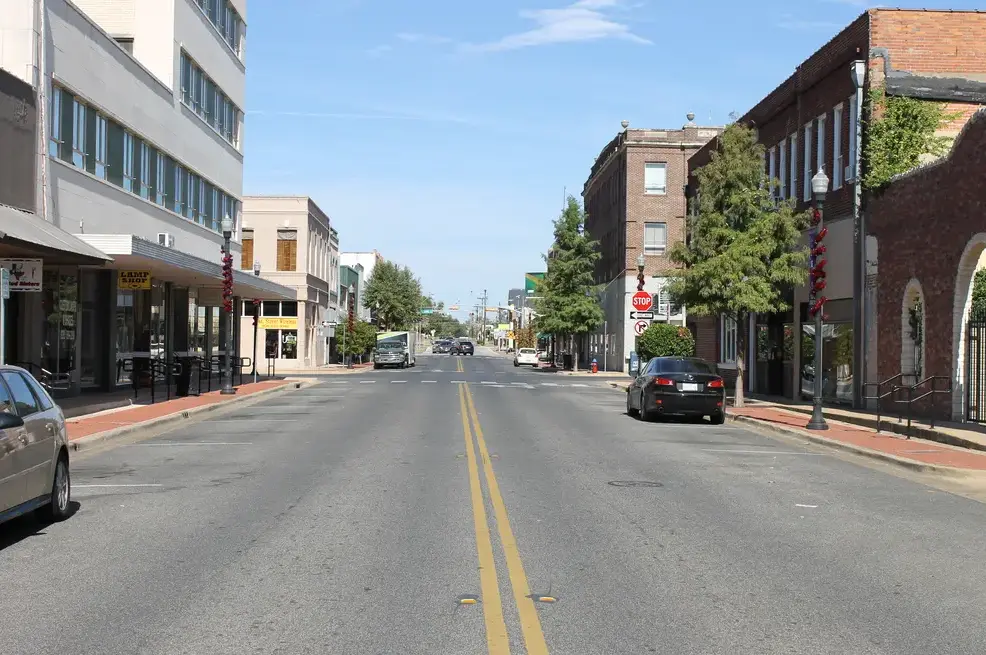
Photo: Billy Hathorn, CC BY-SA 3.0